Organic fertilizer granulator is one of the most important equipment in organic fertilizer equipment, which has a direct impact on the quality of organic fertilizer particles (roundness, uniformity, fertilizer and water retention performance, etc.). So, what are the differences in the granulation processes of organic fertilizer? What are the impacts on the product quality? Different granulating processes of organic fertilizer need different types of granulators, which directly affect the output, quality, appearance and price of products. It can be said that organic fertilizer granulator is the core of the whole production line.
Which granulator is suitable for organic fertilizer production?
The raw materials for making organic fertilizer come from a wide range of sources, including plant residues, peat soil, humic acid, cow manure, chicken manure, sheep manure, duck manure, free manure, sludge, filter mud of sugar mill, distillery’s grains, etc. In view of different raw materials and the requirements for the improvement of product quality and product output, various organic fertilizer equipment manufacturers have developed various granulators, such as roller extrusion granulator, rotary granulator, disc granulator, new organic fertilizer granulator, new compound fertilizer granulator, flat mold granulator, ring mold granulator, etc.
First of all, let’s talk about the advantages and disadvantages of each granulator, which can give you the choice of granulator as a reference.

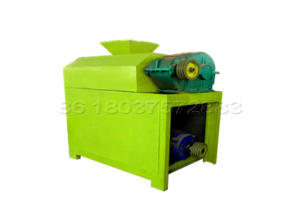
Roller extrusion granulator.
The double roll extrusion granulator belongs to dry granulation without drying process. It has high granulation density, good fertilizer efficiency and full organic matter content. It saves the cost of buying dryer and cooler, and doesn’t need to burn coal in the later stage, which saves a large part of capital. However, the shape of extruding granulator is flat and round, so it is easy to jam when the field crop machine is sowing, and the fluidity is not very good. Therefore, if it is for the organic fertilizer produced by machine seeding farmers, this granulation process should be used carefully, and it is recommended to select compound fertilizer and compound fertilizer.
Rotary Drum Granulation equipment.
The conversion granulator is a process that has been used in compound fertilizer granulation, and can also be used to produce organic fertilizer, but the granulation rate is low. If organic inorganic organic fertilizer is produced, this process can be selected.

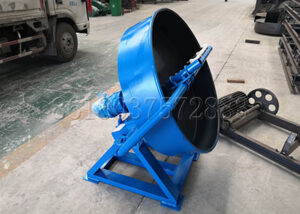
Disc Pelletizer.
Disc granulator is a traditional granulation process. I personally respect this kind of granulator. It has the advantages of smooth granulation, good appearance and low equipment price. The only disadvantage is the low density;. At present, people are pursuing new and new granulation methods, so the users are less and less.
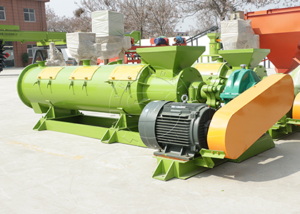
Agitated tooth organic fertilizer granulator.
This kind of granulator is the most popular product in the market, and it is also widely favored by customers. This process has high output and smooth treatment. If the organic fertilizer throwing round machine is added, the granulation can be comparable to the disc granulation. But you need to buy a dryer, a cooler. Therefore, the price of the whole set of equipment for this process is relatively expensive.
The above is the market mainstream granulation process advantages and disadvantages, see here we can choose their own granulator. So here are some suggestions for you. If your investment funds are limited or the sales market has not been opened, I suggest that you can start a production line of powdered organic fertilizer. The low price and good quality of powdered organic fertilizer equipment will help you open up your market. After the sales market is opened, the production can be increased and equipment can be purchased. It is not too late to do the pellet production line.
Email: info@fertilizer-plants.com