Organic Fertilizer Composting Methods

According to different classification conditions, fertilizer compost is divided into the following 5 categories:
1. According to the oxygen demand of microorganisms, it is divided into aerobic composting and anaerobic composting. Aerobic composting is a biochemical process that relies on the action of obligate and facultative aerobic microorganisms to degrade organic matter, and its decomposition speed is fast and the cycle is short.  For this, we can provide you with professional aerobic composting machine. Anaerobic composting is a process in which organic matter is degraded by the action of obligate and facultative anaerobic microorganisms, and its decomposition rate is slow and the fermentation period is long. Most of the currently used composting is aerobic fermentation.
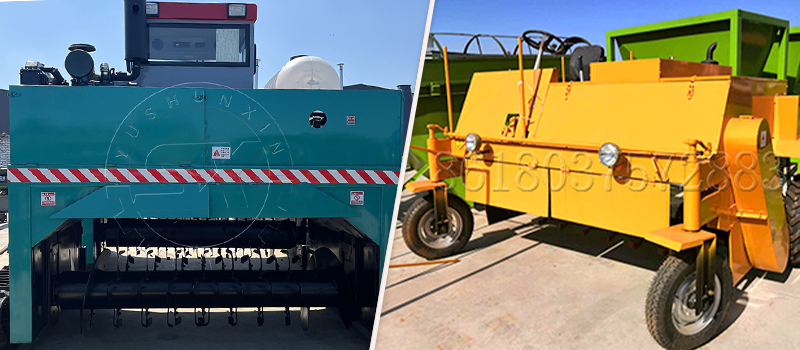
Windrow compost turner for organic waste

2. According to the temperature requirements, it is divided into medium temperature compost and high temperature compost. The fermentation temperature of medium-temperature composting is 14~45℃, which cannot achieve the purpose of harmlessness. At present, this method is rarely used. The fermentation temperature of high-temperature composting is 50-65℃, and the highest is 80-90℃. It is currently the most widely used fermentation method. In-vessel fermentation tank is a typical high remperature composter.

3. According to the form of material movement in the composting process, it is divided into static composting and dynamic composting. After the static compost pile is built, it will not be overturned until the compost is fully decomposed and transported out. Dynamic composting adopts continuous or intermittent feeding or discharging dynamic mechanical composting method, and the fermentation efficiency is high.

4. According to the composting method, it is divided into windrow-type composting and trench-type composting. windrow-type composting is that the materials are piled into strips for fermentation in an open site, and the crawler-type mechanical turning machine is used to turn the pile. The trench-type composting is to put the material into a fixed tank and close it, and turn it over with a top track-type turning machine. Click here for suitable compost machine

Equipment for organic fertilizer composting in groove

5. According to the fermentation process, it is divided into primary fermentation and secondary fermentation. A fermentation starts from the fermentation, goes through a medium temperature period, a high temperature period and then a cooling period. Secondary fermentation is that after primary fermentation, most of the easily degradable organic substances in the compost material have been degraded by microorganisms, but there are still some easily degradable and a large number of refractory organic substances, which need to be further fermented to make them change. It can form relatively stable organic matter such as humic acid and amino acid to reach maturity.

More details on https://fertilizerequipmentmanufacturer.com/large-scale-composting-equipment/

What Stages Are Involved In Small Scale Organic Fertilizer Composting?

General stage devision

The small scale organic fertilizer composting generally can be devided into two stages, namely the first high-temperature compost decomposed fermentation stage and the second aging stage. During this process, the unstable organic matter is transformed into stable humus through the decomposing process and under the action of microorganisms. Here, SX can provide you with high quality equipment for samll scale fertilizer fermentation

Let’s talk about the first stage : by proportioning the raw material matrix, the compost will absorb high oxygen, generate high temperature, greatly reduce the degradable volatile solids, gradually reduce the odor, and gradually change the color of the compost pile, and it is necessary to maintain good aeration and moisture control. .

Secondary composting of samll scale composting : The temperature initially decreased, the oxygen absorption rate decreased, and the odor completely disappeared.

Compared with the first compost, the second compost cannot be used without the second compost, because the second compost can degrade the refractory organic matter, and the mesophilic microbial colony can be re-established, thereby helping the organic fertilizer to decompose, reducing phytotoxic substances and inhibiting pathogenic bacteria.  Click here for more details

Ddeviding from temperature changing

The temperature change of organic fertilizer can define whether it is decomposed or not.

Groove compost turner for samll scale composting

Temperature rising stage:

The decomposing temperature of organic fertilizer rises to 45℃, mainly actinomycetes, fungi and bacteria, mainly decompose sugars and starches. Even active biological animals and animals are involved.

High temperature stage:

The decomposing temperature reaches above 45°C, mesophilic microorganisms are inhibited, and thermophilicity dominates. Soluble organic matter continues to be decomposed by oxidation, and complex organic matter (cellulose, hemicellulose, protein, lignin) also begins to be decomposed. Around 50°C (thermophilic fungi and actinomycetes); around 60°C (thermophilic bacteria and actinomycetes); around 70°C (most microorganisms have been unable to adapt).

The optimum temperature for decomposing is 55°C, because most microorganisms are most active at this temperature and are most likely to decompose organic matter, and most of the germs, eggs and weed seeds will be killed. Please check https://fertilizerequipmentmanufacturer.com/small-scale-composting/ , you can find many equipment to help you in this espect.

Temperature falling stage:

Mesophilic microorganisms start to multiply again, take the lead, and further decompose the remaining refractory organic matter. At this time, the activity of microorganisms decreased, the oxygen demand of the compost to decompose decreased, the temperature decreased, and the compost gradually became stable.

Commercial Composting Making Machine with Durable and Reasonable Sturcture

The structural parameters and performance parameters of the clamshell machine are optimized and matched by computer aided design, and the strength calculation and life prediction of the parts are carried out. At the same time, the related aspects of the product are simulated. Therefore, the commercial compost machines are more structured produced by FFM factory.
(1) Parts standardization, parts universalization and product serialization are implemented in the design to simplify production, improve efficiency, ensure product quality, reduce production costs, reduce parts types and facilitate maintenance.
(2) Use 3d design software to model the turning plane, focusing on the structural design and layout of the throwing knife. By analyzing the stress state in the working process, combining with the motion process of the tool parts and the strength analysis in the region, the theoretical model of parameters was established to optimize the working parameters.

Commercial Crawler Type Composting Turner
Crawler type compost turner with rubber track chassis design.

(3) The spindle of the gear motor is directly connected to the drive shaft, and the whole machine is driven by the left and right driving wheel motor and the reducer respectively, controlled by the same frequency converter, to ensure the parallel walking of the machine, avoid two single reduction motor in the large span of the drive shaft and the drive shaft dislocation, so that the power transmission efficiency is high, vibration reduction, smooth operation. Using the commercial type of composting machine can automatically identify the slot end position to dock or return, remote control wireless remote control operation.
(4) Under the premise of ensuring reliability, the quality of the whole machine is reduced to the minimum, the lightweight design of the whole machine is realized, and the power quality ratio is improved to make the operation more economical. In view of the harsh working environment, the steel has been treated with anti-corrosion for many times to enhance the anti-corrosion performance and durability of the equipment.
(5) The working resistance sensor technology is adopted, and the pressure sensor is set up on the walking device. Pressure sensors are installed on each walking wheel of the commercial composting making equipment. When the pressure sensor signal of the walking wheel changes, the driving wheel of the walking wheel slows down or even stops rotating until the signal is normal and the walking wheel continues to move. The setting can control walking speed, reasonable use of power, improve work efficiency.

If you have any interest of our commercial composting machine, you can click the following link.

https://www.fertilizerfactorymachine.com/commercial-compost-facility/

What it the Function of Commercial Composting Equipment?

The commercial groove type of composting machine is the core equipment of aerobic dynamic composting. As a new type of machinery, it has not been seen in the national product catalog, but it has rapidly multiplied in the fertilizer machinery and equipment family. It has become a mobile phone that replaces labor and forklifts to turn materials. It is a mainstream product that affects the development trend of the composting industry. The commercial groove compost turner plays an important in the composting production.

1. Stirring function in raw material conditioning. In fertilizer production, some auxiliary materials must be added in order to adjust the carbon-nitrogen ratio, pH, and water content of the raw materials. The main raw materials and various auxiliary materials that are roughly piled together in proportion can be mixed evenly by the turning machine to achieve the purpose of quenching and tempering.

2. Adjust the temperature of the raw material pile. During the operation of the stacker, the raw material pellets are fully contacted and mixed with the air, and a large amount of fresh air can be conserved in the stack, which helps the aerobic microorganisms to actively generate fermentation heat, and the stack temperature rises. When the temperature is high, fresh air can be supplemented.  It forms a state of alternating medium temperature-high temperature-medium temperature-high temperature, and various beneficial microorganisms grow and multiply rapidly in the temperature range that they are adapted to.

Groove Commercial Composting Equipment
Commercial groove compost turner made by reliable FFM company.

3. Improve the permeability of the raw material pile. The pile turning system can process the materials into small clumps, making the sticky and dense raw material piles fluffy and elastic, forming a suitable porosity.

4. Adjust the moisture content of the raw material pile. The suitable moisture content of raw material fermentation is around 55%, and the moisture standard of finished organic fertilizer is below 20%. During fermentation, biochemical reactions will generate new water, and the consumption of raw materials by microorganisms will also cause the water to lose its carrier and be freed. Therefore, with the fertilizer production process to reduce the water in time, in addition to the evaporation formed by heat conduction, the compulsory water vapor will be emitted when the raw material is turned by the commercial fermentation machine.

5. Realize the special requirements of compost process. Such as crushing of raw materials, giving a certain shape to the pile of raw materials or realizing quantitative displacement of raw materials, etc. As one of the important equipment in the process of fermentation equipment and organic fertilizer production, the stacker has been at the forefront of the development of the times and has made great contributions to the production of organic fertilizer.

The following webstie allow you to know more information.

https://www.fertilizerfactorymachine.com/commercial-compost-facility/

E-mail: info@fertilizerfactorymachine.com

TEL: +86 180 3757 2883