Choosing the right blended fertilizer production solution depends on your raw materials, target fertilizer formulations, production capacity, and investment budget.
For commercial fertilizer manufacturers, two common options are bulk blending of existing granules and granulation of mixed fertilizer powders. Each solution offers different advantages in equipment configuration, operating costs, and finished fertilizer quality.
1. Bulk Blending Fertilizer Production for Flexible NPK Formulations
A bulk blending fertilizer plant solution suits manufacturers using granular urea, DAP, MAP, MOP, and other compatible fertilizer materials.
The production system typically includes automatic batching, conveying, mixing, and quantitative packaging.
Because this process uses existing granules, manufacturers generally do not need additional granulation, drying, or cooling equipment.
Moreover, adjusting raw material proportions allows manufacturers to produce different NPK formulations, provided the ingredients meet nutrient and physical compatibility requirements.
This solution particularly suits regional fertilizer suppliers seeking flexible production with relatively low equipment investment.
2. Fertilizer Granulation for Commercial Compound Fertilizer Manufacturing
A blend fertilizer granulation line processes mixed fertilizer powders into new granules.
Manufacturers can choose dry roller extrusion or wet rotary drum granulation according to their formulations and finished-product requirements.
Unlike physical blending, granulation forms new fertilizer particles from prepared materials.
Therefore, the production system may require crushing, mixing, granulation, screening, drying, cooling, and packaging.
Although equipment investment can be higher, this solution suits manufacturers requiring newly formed compound fertilizer granules with controlled particle specifications.
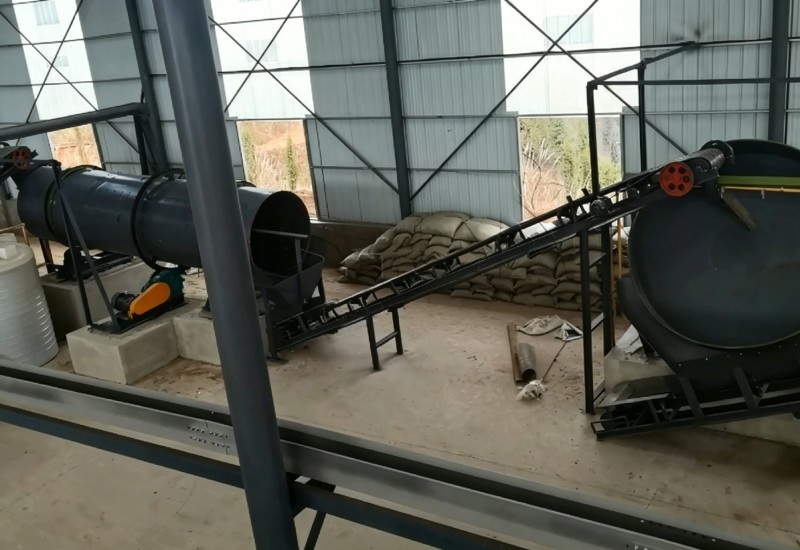
3. How to Plan Your Fertilizer Manufacturing Facility
The blend fertilizer production plant layout should consider workshop dimensions, material flow, equipment capacity, and storage requirements.
For physical blending, a compact arrangement can connect batching bins, mixers, and packaging machines.
However, granulation projects generally require additional space for granulators, thermal processing, screening, and material recycling.
For more information about complete fertilizer manufacturing configurations, visit:
https://www.mixedfertilizermachines.com/products/fertilizer-blending-plant/
4. Which Solution Best Matches Your Investment?
If you primarily manufacture different NPK grades from existing fertilizer granules, an NPK blend fertilizer manufacturing system may offer a practical investment option.
However, manufacturers processing fertilizer powders into new granules should consider a suitable granulation system.
Before purchasing, compare raw material characteristics, production capacity, workshop space, energy consumption, and expected operating costs.
Conclusion
Both technologies support commercial fertilizer production, but their processing requirements differ significantly.
Explore our industrial fertilizer blending solutions and contact YUSHUNXIN with your raw materials, target capacity, and budget for a customized equipment proposal.