In the fermentation process of organic fertilizer, it can be divided into anaerobic fermentation and aerobic fermentation.
In the anaerobic fermentation of composting, anaerobic microorganisms are mainly used to carry out a series of decomposition processes under the condition of anoxic and anoxic conditions, so as to the materials are suitable for making fertilizer, and the final product is methane with a small amount of carbon dioxide and humic organic matter. There will also be other organic acid reducing substances such as sulfuric acid and ammonia. The composting process is simple and requires no manual operation, but the reaction speed is slow, the composting cycle is long, and the removal of harmful substances is incomplete.
Aerobic fermentation refers to the process of stably converting organic matter materials into humus fertilization by artificially configuring appropriate CN ratio, moisture, oxygen (ventilation), temperature and other environments to promote mass reproduction and decomposition of microorganisms. The final product of this type of fermentation can achieve maximum removal of harmful organic matter. For this, SX can provide you with suitable fertilizer composting line.
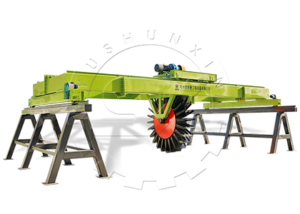
In the process of aerobic fermentation, it is necessary to build a fermentation workshop, stack the organic materials in batches in the fermentation workshop, manually adjust the CN ratio of the organic materials, adjust the moisture appropriately, and ferment after adding beneficial bacteria. , During the fermentation process, by observing the activity and reproduction of the bacteria through the change of temperature and humidity, the appropriate use of fertilizer turning machines (wheel type turning turning machines, crawler turning turning machines, trench turning turning machines) is used to process the materials. Click here to learn more details of fertilizer composter. The turning and throwing can make the bacteria fully contact with oxygen, play the role of ventilation and contact with oxygen, so that the bacteria can reproduce and decompose organic matter better. At the same time, during the stacking process, the bacteria will release a lot of heat during the decomposition process. When the heat reaches a certain temperature, the microorganisms will not be able to survive. The composting process can also fully cool the microorganisms and achieve a suitable environment for the decomposition and reproduction process.

In the fermentation of organic materials, the assistance of a fertilizer turning machine can simplify the fermentation time period. Generally, organic fertilizer manufacturers use trench type fermentation in the construction of organic fertilizer fermentation workshops, and use brick-concrete structure to build the construction workshop as the organic fertilizer fermentation raw material storage place. The general construction is 4 meters or 5 meters wide. Tracks are laid on both sides of the organic fertilizer fermentation tank, and the turning rack is set on the track on the fermentation tank. The track is combined with the organic fertilizer turning machine, and the turning machine can pass the track. The organic material in the tank is fully tossed. A single wider trough can be selected with an organic fertilizer roulette turner. Ordinary or hydraulic organic fertilizer turning machines can be used for multi-channel troughs. In some places that are not suitable for building organic fertilizer fermentation tanks, organic fertilizer crawler type turning machines can be used to store organic materials in strips, and organic fertilizer crawler type turning machines can be used for successive turning.If you want to know more information, please check https://fertilizerequipmentmanufacturer.com/compost-fertilizer-making-machine/

The organic fertilizer trench turning machine is generally composed of 16# or 22# channel steel as the main body, welding the main frame, installing the main shaft, turning teeth, motor reducer, traveling motor, hydraulic pump station, etc. The trench turning equipment is economical and practical, and the operation is simple. It is the choice of most organic fertilizer manufacturers.