How To Dispose Of Animal Manure In Farm

With the country’s further emphasis on environmental protection, livestock and poultry manure in the breeding industry is also one of the main sources of environmental pollution. But at the same time, if the livestock and poultry manure is processed, it is also a valuable organic fertilizer resource.Through processing animal manure into quality fertilizer  can not only turn waste into treasure, but also realize the reuse of resources. At the same time, it can also reduce the pollution of the environment and prevent the spread of diseases.

Using animal manure as fertilizer

Then what is the process of manure fertilizer making?

First of all, we need to ferment the collected livestock and poultry manure. There are many ways to ferment. You can choose a fermenter to ferment, build a fermenter to store in a fermenter, or the most primitive stacking for fermentation. It is necessary to add corresponding auxiliary materials (straw, bean dregs, humic acid, etc.) to ferment the fermentation tank or fermenter to increase the organic matter in the raw materials and accelerate the fermentation stage. The fermentation agent has the main functions of deodorizing, sterilizing, decomposing harmful substances in livestock and poultry manure, killing weeds, and accelerating the fermentation cycle. The original composting fermentation has a long fermentation period, which pollutes the environment more, and the harmful substances in the manure of livestock and poultry cannot be effectively removed. In the tank fermentation, it is necessary to turn over the manure of livestock and poultry, so that the microbial agent can better reproduce and decompose the harmful substances in the raw materials. Therefore, in the fermentation stage, it is necessary to use compost making machine (hydraulic turning machine, roulette turning machine, chain plate turning machine, etc.).

After the materials are fermented, turned and decomposed, they need to be transported to the secondary storage area with a forklift. Use a forklift to transport the material to the organic fertilizer forklift feeding bin, and through the uniform feeding and unloading of the forklift feeding bin, use the belt conveyor to transport the material to the organic fertilizer semi-wet material grinder for crushing. The material crushed by the pulverizer is transported to the organic fertilizer powder screening machine through the belt conveyor. The screened material can be directly packaged into powder organic fertilizer, and can also be used as the raw material of granular organic fertilizer. Click here for organic fertilizer business plan

If it is necessary to add nitrogen, phosphorus and potassium (NPK) elements to the sieved powdered organic fertilizer to make organic compound fertilizer, the powdered raw material and nitrogen, phosphorus and potassium (NPK) need to be transported to the organic fertilizer horizontal mixer in a certain proportion for stirring Mixing, conveying to the organic fertilizer granulator machine(new organic fertilizer granulator, disc organic fertilizer granulator, drum organic fertilizer granulator, stirring tooth organic fertilizer granulator, etc.) through the belt conveyor for granulation , the particles are transported to the organic fertilizer dryer by the belt conveyor for drying, and then transported to the organic fertilizer cooler by the belt conveyor for cooling after drying, and the cooled particles are transported to the organic fertilizer particle screening machine by the belt conveyor for further processing. The finished product is screened, and the unqualified products are pulled back to the pulverizer through the return belt conveyor for pulverization or directly equipped with the pulverizer for pulverization, and then continue to the granulation stage after pulverization. The finished product that passes through the organic fertilizer screening machine is transported to the organic fertilizer finished product silo by a belt conveyor, temporarily stored in the finished product silo, and then packaged by an organic fertilizer automatic packaging machine. Packed and stacked in the finished product area. If you want know more organic making systems, you can visit https://fertilizerequipmentmanufacturer.com/how-to-make-organic-fertilizer/

In the end, the harmful livestock and poultry manure becomes an organic fertilizer that is beneficial to the land and the environment. The centralized and harmless treatment of livestock and poultry manure has also produced certain economic benefits. It has avoided environmental pollution for the environment and provided high-quality organic fertilizers for the land. It really serves multiple purposes.

Area Occupied By The Organic Fertilizer Factory

In many consultations, I found that some friends are more concerned about the area occupied by the organic fertilizer production factory. The following is a brief summary of the area occupation of different annual output fertilizer making.

Organic fertilizer plant layout

Under normal circumstances, an organic fertilizer factory needs a raw material temporary storage area, a high-temperature aerobic fermentation and decomposing area, an aging area, a fertilizer making area, a finished product area, and an office building.

  1. Temporary storage area for raw materials: it is only used for temporary storage of poultry manure and straw auxiliary materials. If it does not rain frequently in the local area, it can be used in the open air.
  2. Fertilizer high-temperature fermentation and decomposing area: need to build a factory building with a height of more than 5 meters. The ceiling of the workshop can be designed with color steel + sunshine board.
  3. Aging area: This area is only used for decomposing and aging fermented materials. It does not have high requirements for the factory building, and only needs to be treated with rain protection.
  4. Fertilizer making area: This area is mainly used for fertilizer formulation and packaging, and the plant height needs to be more than 6 meters. This is the space for organic fertilzer manufacturing line location.
  5. Finished product area: This area mainly places finished fertilizers, and the height of the plant needs to be more than 6 meters. Click here for process organic fertilizer making
  6. Office building: It is mainly an area for people to work and discuss business.
Organic fertilizer factory making line

The area that the organic fertilizer plant needs to occupy.

Estimation of suitable land area for organic fertilizers with different annual yields:

500 tons of organic fertilizer plant required site area: 2,000 acres

1000 tons of organic fertilizer plant required site area: 2,600 acres

2000 tons of organic fertilizer plant required site area: 3,300 acres

5,000 tons of organic fertilizer plant required site area: 5,300 acres

10,000 tons of organic fertilizer plant required site area: 10,000 acres

20,000 tons of organic fertilizer plant required site area: 20,000 acres

30,000 tons of organic fertilizer plant required site area: 30,000 acres

The required site area for a 50,000-ton organic fertilizer plant: 50,000 acres

100,000 tons of organic fertilizer plant required site area: 100,000 acres

An independent organic fertilizer factory with a capacity of more than 100,000 tons (an organic fertilizer factory with a daily raw material consumption of about 450 tons and a daily production of 300 tons) is rare.

PS: The above plant area is only an estimate, and the actual occupied area needs to consider production line configuration, production line layout and other factors.

More details of organic fertilizer production, please click https://fertilizerequipmentmanufacturer.com/how-to-make-organic-fertilizer/

Common Methods For Cow Dung Treatment

With the development of cow breeding industry, cattle littter dispoal has been a difficulty for farm owners. There are two methods are commonly used by them for cow waste management.

Build a digester

In recent years, through the construction of biogas digesters to treat cow dung, it not only solves the fuel source of the masses, but also makes the cow dung fully decomposed. The residue and liquid of biogas are good organic fertilizers, which can improve the yield and quality of fruits and vegetables.

Cow dung organic fertilizer making system for sale

Converting cow crap into organic fertilizer

Dry cow dung contains 10%–20% crude protein, 1%–3% crude fat, 20%–30% nitrogen-free extract, 15%–30% crude fiber, so it has high nutrients. Organic fertilizer produced by cow dung compost  can loosen soil, improve soil compaction, chelate trace elements in the soil, and improve soil fertility. Click here for concrete process of cow dung organic fertilizer production

Using cow dung as raw material to produce organic fertilizer has characteristics of low cost, relatively stable quality and large market sales space. However, the traditional method of composting not only has a slow fermentation speed, but also cannot make the cow dung fully decomposed. After being applied to the farmland, “secondary fermentation” is prone to occur, resulting in the phenomenon of burning roots and seedlings. Here, you need a organic fertilizer composting machine. It will turn cow litter regularly to facilitate aerobic fermentation. In 15 to 20 days, it can help you finish the deodorization, fermentation, insecticide and sterilization of cow dung. The fermented organic fertilizer has good fertilizer efficiency, is safe and convenient to use, will not cause burning of roots and seedlings, and can also improve soil fertility and improve the utilization rate of cattle manure.

How to compost cow dung manure

Through the above comparison, we can clearly understand that the value of cow dung organic fertilizer is much higher than that of untreated raw cow dung. So making cow dung into organic fertilizer is an good choice for you. If you need more details, you can check https://fertilizerequipmentmanufacturer.com/cow-dung-fertilizer-machine/

How To Dispose of Animal Waste

Regarding the issue of livestock and poultry manure resources, General Secretary Xi Jinping said: Accelerating the disposal and recycling of livestock and poultry breeding waste is related to the production and living environment of more than 600 million rural residents, related to the rural energy revolution, and whether it can continuously improve soil fertility and manage agricultural aspects. Source pollution is a great deed that benefits the country and the people in the long run.

Cow dung for making organic fertilizer

Han Changfu pointed out that at present, five major actions have been carried out for rural environmental protection, namely, livestock and poultry manure control actions, fruit and vegetable tea organic fertilizers to replace chemical fertilizers, straw treatment actions in Northeast China, aquatic organisms protection actions focusing on the Yangtze River, and agricultural film. Recycling action.

In the livestock and poultry manure control action, Han Changfu said that our goal is: “After five years of hard work, the manure of large-scale farms across the country can be used in a harmless and resourceful manner.

We must conscientiously implement the spirit of General Secretary Xi Jinping’s important speech, and resolutely complete the hard task of resource utilization of livestock and poultry manure with more solid, powerful and effective actions, and provide strong support for the modernization of agriculture and rural areas and the construction of a beautiful China.
So how to make reasonable use of livestock and poultry manure? It is a good choice to use organic fertilizer equipment to make organic fertilizer from livestock and poultry manure. The following are the detailed steps:

First, the organic materials such as livestock and poultry manure and crop straw are fully fermented and decomposed, and then the fermented and decomposed materials are further processed and made into pellets, which are convenient for use and storage. Click here to know more

The following equipment will be used in animal manure fertilizer making:

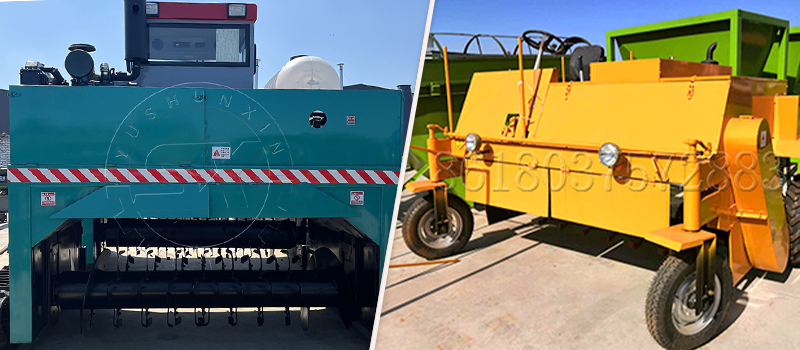
1. Fermentation  and compost equipment: There are many types of fermentation stackers, chain plate stacker, trough stacker, mobile stacker, crawler stacker, forklift stacker, you can do it by yourself choose, you can also consult us, we will recommend the appropriate model equipment for you.

2. Pulverizing equipment: new semi-wet material pulverizer, vertical pulverizer and horizontal pulverizer, the internal structure has chain type and hammer type. Even if the material is pulled out of the water and crushed, it will not block.

3. Mixing equipment: including vertical mixer, horizontal mixer, double shaft mixer, drum mixer, etc. The internal stirring structure is divided into stirring blade type, spiral type and so on.
Design a suitable stirring structure according to the characteristics of the material. The discharge port is designed for cylinder control and baffle control.

4. Conveying equipment: belt conveyor, mobile belt conveyor, fixed belt conveyor, etc. Belt conveyor is an indispensable economical logistics conveying equipment to form a rhythmic assembly line. It has strong conveying capacity and conveying distance. It has the advantages of long distance, simple structure, easy maintenance, and convenient implementation of programmed control and automatic operation.

5. Granulation making equipment: special granulator for organic fertilizer – including disc granulator, new type of organic fertilizer granulator, rounder, drum granulator, etc. According to the characteristics of raw materials, choose the appropriate granulator.

Complete animal manure processing machines

6. Drying and cooling equipment: rotary dryer, biological organic fertilizer dryer, because the temperature of organic fertilizer cannot exceed 80°, so our dryer adopts hot air drying mode.

7. Cooler: Similar in appearance to the dryer, but different in material and performance.

8. Coating equipment: Particle coating machine – the main body is similar in appearance to the dryer and cooler, but the internal structure is very different. The inside of the coating machine is made of stainless steel plate or polypropylene lining.

9. Automatic packaging equipment: automatic metering packaging machine – including single head and double head, materials are stainless steel and carbon steel, and can customize according to the actual needs of customers.

If you are worried about animal manure disposal, you can check https://fertilizerequipmentmanufacturer.com/how-to-manage-poultry-waste/ for quality equipment.

How To Make Organic Fertilizer At A Low Cost

The use of animal manure to process organic fertilizer is a new industry. Such industries are supported by national policies, sought after by market funds, and their products are welcomed by growers. Such hot products are divided into  powder organic fertilizer production lines and granular organic fertilizer production lines. Whether it is powder or granule, it is divided into three categories according to the output: large, medium and small organic fertilizer production lines. Today, I will talk about the powder organic fertilizer making line in detail.

Process for making powdery organic fertilizer production line

The powder organic fertilizer preparation line has the advantages of simple equipment and process, convenient operation of the production line, low investment cost, convenient maintenance and so on. As the pre-process of granular organic fertilizer production line, the process of powder organic fertilizer production line is simply crushing, fermentation and packaging. The organic fertilizer fermentation equipment used in this set of organic fertilizer production lines is aerobic fermentation bacteria, which has the characteristics of fast heating, good deodorization effect, and thorough decomposing. It is suitable for static fermentation and dynamic fermentation mode, and can effectively treat livestock and poultry manure and Solid organic matter, such as crop straw, straw, pine husk, peanut husk, rice bran, sawn wood, leaves, mushroom leftovers, medicinal residue, sugar mash, distiller’s grains, bagasse, monosodium glutamate residue, furfural residue, protein and The crude fiber is rapidly heated, deodorized, sterilized and decomposed. Constant temperature control for about 15 days can completely kill viruses, germs, insect eggs, and weed seeds, and achieve harmless treatment, so as to effectively curb the occurrence of soil diseases and insect pests and reduce the amount of pesticides. Click here to learn more

For such a simple powder organic fertilizer production procedure. There are many raw materials available for making powdered organic fertilizer. Livestock and poultry manure, domestic garbage, Chinese medicine residue, sludge, etc. SX provides free organic fertilizer technology and plant planning, equipment installation, technical guidance, and complete after-sales service. Equipment required for powdered organic fertilizers turners, screening machines, pulverizers, silos, packaging machines. It can also be designed for you according to your capital, space, and degree of automation. tens of thousands. Hundreds of thousands can do it. If you want to invest tens of thousands of yuan to make powdered organic fertilizer, you only need a compost turner to work. Generally, there are two types of compost turners; ground walking compost turners and trench compost turners. The ground walking type compost turner uses diesel oil, which requires a full-time driver to operate, and does not require civil construction. It can be used directly after delivery. The trough type compost turner has a small footprint, a large workload, energy saving and environmental protection, high automation performance, remote control and manual control, and one machine with multiple troughs.

The main product form of the powder organic fertilizer production line is presented in powder form, and the active ingredients account for more than 90%. It is a high-quality organic fertilizer. If you are interested in it, you can check https://fertilizerequipmentmanufacturer.com/powdery-organic-fertilizer-production-line/ to learn more

Things You Must Know In Cow Dung Organic Fertilizer Making

What you need to pay attention to in the production process of cow dung organic fertilizer:
First of all, the location of the cow dung organic fertilizer plant is very critical. It is close to the raw materials. The raw materials of organic fertilizers are generally obtained locally. If the supply of raw materials is guaranteed through long-term transportation, the cost will increase a lot.

Cow dung fertilizer making process

After the cow dung enters the fermentation tank and starts to ferment, it is necessary to observe the moisture and temperature of the cow dung at any time during the fermentation, control the changes of the raw materials in time, and make timely treatment. Use the organic fertilizer fermentation turning machine to turn the heap to ensure the uniform and full fermentation of the cow dung. Fermentation bacteria can be added during fermentation to speed up the aerobic fermentation, but it is not recommended to add other biological bacteria during this period, because the temperature of the material is very high during fermentation, and many beneficial bacteria cannot withstand high temperatures. Click here to know more
After the cow dung is fermented, it is sent by the conveyor to the forklift silo for use. This silo is generally equipped with a speed regulation function, which can well control the feeding speed of the rear lingering equipment. After coming out of the silo, it enters the mixer. At this time, some auxiliary materials can be added to the raw materials. Generally, we recommend designing two mixers, one for mixing and one for discharging. After the material is stirred evenly, it need to be crushed. The organic fertilizer crusher is not the same as the general crusher. Since we need the material to maintain a certain amount of moisture, the crusher should use a semi-wet material crusher. 20%-50%, fully capable of crushing our organic fertilizer raw materials.

Granulation affects the forming effect of the entire cow dung fertilizer production line, so the choice of granulator is very important. According to the different raw materials, the models we want to use are also different. For example, we use cow dung as the raw material of organic fertilizer, and add some other organic substances (straw, sawdust, etc.) appropriately, we reommend you use organic fertilizert stirring teeth granulator, this model uses the match between the stirring teeth and the cylinder wall to force the fertilizer material into granules, and it is better for some livestock and poultry manures with relatively thick fibers.
Another thing to pay attention to is drying. We all know that organic fertilizer needs to add certain biological bacteria, but too high temperature will kill and reduce the survival of biological bacteria, so temperature control is very important.
If the output of cow dung organic fertilizer is large, we generally recommend adding drying equipment and lowering the temperature to ensure the survival of biological bacteria. It is also possible to consider adding a coating cylinder after drying to directly wrap biological bacteria on the surface of the material.

If you want to learn more about cow dung fertilizer making, please check https://fertilizerequipmentmanufacturer.com/how-to-make-organic-fertilizer-from-cow-dung/

Why Fermentation Tank Is Suitable Organic Fertilizer Compost

Fermentation tank is a manure treatment integrated organic fertilizer equipment, which can operate automatically, continuously and quickly obtain environmentally friendly organic fertilizer, and turn waste into treasure. The  manure fermentation tank uses polyurethane as the insulation layer, which is less affected by the outside world and can be used for fermentation all year round, ensuring the sustainable development of large-scale farms. The integrated organic fertilizer fermentation machine has the characteristics of humanized structure design, convenient operation, stable transmission, low noise, long life, land saving, safety and environmental protection.

Fermentation tank structure :
The fermenter of the manure treatment is a vertical closed tank structure. The whole fermentation tank structure is divided into three parts: the upper part is composed of a wind and rain shelter, a testing platform and an exhaust facility. Ancillary equipment includes automatic tipping bucket elevator, exhaust gas filtration system and other devices. There is an insulation layer filled with polyurethane foaming agent in the middle (the thickness can be customized according to different regional environments), and the outer wall is made of thickened steel plate to support the tank. The lower base part is distributed with hydraulic station, fan and large thrust hydraulic mixing shaft. The middle part is a double-layer thermal insulation tank, an equipment automatic control system, a single-side base fertilizer export device, etc.

Features of manure fertilizer fermentation pot:
The organic fertilizer fermentation tank saves the floor space and reduces the requirements for the installation of the equipment. The whole equipment structure is divided into three parts, the lower part is distributed with hydraulic station, fan and large thrust hydraulic mixing shaft. The middle part is a double-layer thermal insulation tank, an automatic control system for equipment, a single-side fertilizer exporting device, etc. The inner wall of the tank is lined with 304 stainless steel plate, which prolongs the life of the tank and reduces the residue of compost. Click here to know more about fermentation tank

Horizontal fermentation tank

Advantages of fermenter tank :
The advantages of manure fermentation tank over traditional fermentation methods are that high degree of mechanization, easy operation, automatic temperature control, automatic stirring, automatic discharge, and automatic feeding; wide adaptability, integrated rapid fermentation high temperature aerobic fermentation regardless of the north and south , regardless of spring, summer, autumn and winter, it can be fermented and produced all year round.

Fermentation tank usage method:
1. The tower structure is adopted, a batch of manure is put in every day, and a batch of organic fertilizer is produced. The horizontal fermentation tank adopts aerobic fermentation process without adding any auxiliary materials.
2. Fermentation cycle of about 7 days, aerobic fermentation at 60-70 degrees high temperature and constant temperature, continuous fermentation can be achieved by inputting a single strain, and the raw materials of manure with moisture controlled within 70% can be treated. Which is a harmfuless treatment of poultry waste.
3. The moisture content of the produced organic fertilizer is about 30%, the whole process is closed, and the waste gas is deodorized and discharged harmlessly, which reasonably solves the problem of environmental pollution caused by manure.

If you are interested in it, please check https://fertilizerequipmentmanufacturer.com/horizontal-fermentation-tank/ for details

Organic Fertilizer Composting Methods

According to different classification conditions, fertilizer compost is divided into the following 5 categories:
1. According to the oxygen demand of microorganisms, it is divided into aerobic composting and anaerobic composting. Aerobic composting is a biochemical process that relies on the action of obligate and facultative aerobic microorganisms to degrade organic matter, and its decomposition speed is fast and the cycle is short.  For this, we can provide you with professional aerobic composting machine. Anaerobic composting is a process in which organic matter is degraded by the action of obligate and facultative anaerobic microorganisms, and its decomposition rate is slow and the fermentation period is long. Most of the currently used composting is aerobic fermentation.

Windrow compost turner for organic waste

2. According to the temperature requirements, it is divided into medium temperature compost and high temperature compost. The fermentation temperature of medium-temperature composting is 14~45℃, which cannot achieve the purpose of harmlessness. At present, this method is rarely used. The fermentation temperature of high-temperature composting is 50-65℃, and the highest is 80-90℃. It is currently the most widely used fermentation method. In-vessel fermentation tank is a typical high remperature composter.

3. According to the form of material movement in the composting process, it is divided into static composting and dynamic composting. After the static compost pile is built, it will not be overturned until the compost is fully decomposed and transported out. Dynamic composting adopts continuous or intermittent feeding or discharging dynamic mechanical composting method, and the fermentation efficiency is high.

4. According to the composting method, it is divided into windrow-type composting and trench-type composting. windrow-type composting is that the materials are piled into strips for fermentation in an open site, and the crawler-type mechanical turning machine is used to turn the pile. The trench-type composting is to put the material into a fixed tank and close it, and turn it over with a top track-type turning machine. Click here for suitable compost machine

Equipment for organic fertilizer composting in groove

5. According to the fermentation process, it is divided into primary fermentation and secondary fermentation. A fermentation starts from the fermentation, goes through a medium temperature period, a high temperature period and then a cooling period. Secondary fermentation is that after primary fermentation, most of the easily degradable organic substances in the compost material have been degraded by microorganisms, but there are still some easily degradable and a large number of refractory organic substances, which need to be further fermented to make them change. It can form relatively stable organic matter such as humic acid and amino acid to reach maturity.

More details on https://fertilizerequipmentmanufacturer.com/large-scale-composting-equipment/

Technology of Commercial Cow Dung Organic Fertilizer Making

The commercial cow dung organic fertilizer making must comply with commercial sales requirement, and processing cow littler into granular form is the top priority, because the cow dung powder organic fertilizer that has undergone harmless fermentation treatment has a short storage time, is inconvenient for transportation, and has insufficient fertilizer retention time. Therefore, the processing of cow dung organic fertilizer granulation has become an indispensable process. So, how to process cow dungpowdered fertilizer into granular cow dung organic fertilizer?

Cow dung fertilizer making process

Naturally, the cow dung organic fertilizer granulator is inseparable. The use of the cow dung organic fertilizer granulator fertilizer technology can realize convenient storage and transportation, and protect the Fat and so on. The fertilizer process making cow dung organic fertilizer pellets by granulator is like this. Click here to know more about cow dung fertilizer processing

The decomposed powdery organic fertilizer raw materials are first mixed, then sent to the silo through the belt conveyor, and then granulated by the cow dung organic fertilizer granulator, and then sent to the dryer for further drying. After drying, it is sent to the screening machine. After coating, the next process is packaging and storage. Explain why coating is needed here? Just like the coated tablets that people eat, it can play a role in maintaining fertilizer and not losing.

Rotary drum granulator for cow dung processing

Therefore,  the process flow required for the commercial cow dung organic fertilizer production line is as follows: Turner – Uniform Feeder – Crusher – Mixer – Cow Dung Organic Fertilizer Granulator – Dryer – Drum Sieve – Coating Machine – Automatic Weighing Packing Scale.

The above is the commercial cow dung organic fertilizer making process. In actual operation, the process can be improved according to the requirements of the workshop. More details please check https://fertilizerequipmentmanufacturer.com/fertilizer-drying-machine/

How to remove the odor and pests of animal manure?

In the process of processing livestock and poultry manure into organic fertilizer by the organic fertilizer equipment is also the process of removing the odor, weed seeds, diseases and insect pests contained in the livestock and poultry manure. In this process, what is the principle for the use of organic fertilizer making machine to remove odors and pests? Simply, it through the use of organic fertilizer turners to promote the fermentation process, by adjusting temperature, moisture, ventilation, and Microbial activity deodorization and other means. Here, we refer to equipment such as compost turners and fermentation tank. No matter the compost turners or fermentation tank, the common function is to keep the organic matter of the material from loss through aerobic fermentation, while removing odors and pests and so on. Click here for more organic fertilizer machines

If you want to understand how to use organic fertilizer equipment to remove the odor and pests of animal manure, you must first understand the source of these odors and pests. The source of odor in the production of organic fertilizer: The odor in the production of organic fertilizer mainly comes from the decay of raw materials, the fermentation of organic fertilizer and the drying of organic fertilizer. Harmful germs originate from livestock and poultry themselves or from breeding materials.

The odor in the production of organic fertilizers usually has ammonia, hydrogen sulfide, etc., which can cause different degrees of toxicity to human respiration, digestion, cardiovascular, endocrine and nervous systems. Even if some odors are not harmful to health, There are also mental or emotional stimulation and influence on people.

Organic fertilizer making process

1. The method of organic fertilizer equipment to remove foul odor during composting process

The methods of using organic fertilizer equipment to remove malodorous odors in the composting fermentation process include: microbial deodorization, plasma deodorization, ozone oxidation, masking, air dilution, as well as adsorption, combustion, washing and many other methods. The microbial deodorization method is the most commonly deodorizing method of organic litter.

Odor suppression and elimination in the manure composting process: The generation of odor can be suppressed to a certain extent by adjusting the ventilation of the material, increasing the ventilation volume and adding adsorbent materials. However, due to the large amount of fermentation materials, the concentration of odor and the relative closure of the site, the odor concentration in the fermentation site is extremely high, and sometimes the ammonia concentration in the site is as high as 300 mg/L or more. This also resulted in the loss of a large amount of nutrients. Measures need to be taken to collect and process.

The biological deodorization method in the process of fermentation and decomposing of materials by organic fertilizer equipment, this method is to decompose and convert odor components through biochemical reactions under the action of organisms to achieve the purpose of deodorization. At present, the most common application is to use microorganisms to deal with odor. Therefore, it is also called microbial deodorization. The greater advantages of this method are low operating costs, energy and resource savings, and ease of maintenance.

Trench compost turner for odor and pest eggs kill in animal manure

In the process of using organic fertilizer machine to ferment and decomposethe materials, the odor generation stage: mainly occurs in the initial stage of fermentation. Due to the rapid degradation of easily decomposed organic substances, a large amount of oxygen is consumed, resulting in local hypoxia and the production of small molecular organic substances and hydrogen sulfide. Wait. At this time, due to the low pH, it is not easy to produce ammonia volatilization. After about 1-2 weeks, a large amount of ammonia volatilization occurs as the pH value of the compost increases. At this point, the compost has gradually completed the first fermentation of the compost.

2. The realization method of organic fertilizer equipment to remove pests and diseases in the process of fermentation and turning

In the process of promoting fermentation and decomposing by organic fertilizer equipment, in the process of regulating moisture, temperature, ventilation, etc., the temperature changes repeatedly. kill. At the same time, in the process of fermentation and decomposing, the eggs and bacteria in the feces are killed with the change of temperature.

The organic fertilizer produced by SX organic fertilizer equipment plays a significant role in crop growth and control of pests and diseases. It can effectively kill diseases and insect pests, and remove the odor of livestock and poultry manure. Therefore, it is also environmentally friendly, and can effectively reduce pollution emissions from aquaculture. This benign green ecological agriculture cycle is the benign development of our ecological agriculture. More details please check https://fertilizerequipmentmanufacturer.com/organic-fertilizer-production-equipment/