How Much Does a Compost Fertilizer Granulation Line Cost?

Embarking on the journey to establish a compost fertilizer granulation line is a commendable step towards sustainable agriculture and waste management. However, one of the critical considerations for any entrepreneur or farmer is the cost involved. While the exact cost can vary drastically based on numerous factors, this blog aims to provide you with a detailed overview of cost in setting up a compost fertilizer granulation line.

Compost pellet making line process

Initial Equipment Costs

The heart of any granulation line is its equipment. The compost pellet making line cost includes:

1. Composting Turner: To facilitate the aerobic decomposition of organic waste, an efficient composting turner is necessary. Prices range from $3,000 to $30,000, depending on the size and technology.

2. Crusher: To ensure that raw compost materials are finely crushed, a crusher is used. Depending on capacity, price can vary between $1,000 to $10,000.

3. Mixer: A mixer ensures that the compost is homogeneously mixed with other materials. Costs typically range from $2,000 to $15,000.

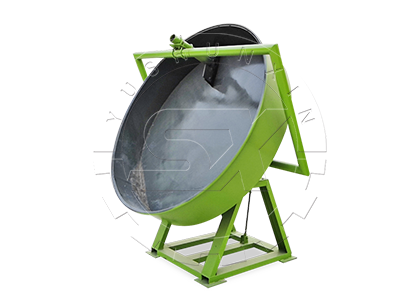
4. Pellet Mill or Granulator: The most critical piece of equipment, the granulator, converts compost into pellets. The common compost pellet machines prices is between $10,000 and $80,000, depending on capacity and additional features.

5. Dryer and Cooler: These are needed to reduce the moisture content of the pellets and ensure they are stable for storage. Combined, these units can cost between $15,000 and $50,000.

6. Screening Machine: This equipment ensures the uniform size of pellets. Prices range from $5,000 to $30,000.

7. Packaging Machine: To bag and seal the final product, a packaging machine is necessary. Costs can range from $5,000 to $20,000.

Click here to learn more.

Auxiliary Costs

In addition to the core equipment, several auxiliary costs need to be considered for compost granule manufacturing plant budget:

1. Installation and Commissioning: Professional installation and commissioning services can add another $10,000 to $30,000 to your budget.

2. Land and Building: Depending on your location, the cost of land and constructing a suitable building can range from $50,000 to $500,000.

3. Operational Costs: These include labor, electricity, water, and maintenance. Initial operational costs might be $10,000 to $50,000 annually but will vary based on scale.

4. Licenses and Permits: Acquiring the necessary permits and licenses can cost between $5,000 to $15,000, depending on local regulations.

Total Estimated Cost

Summing up the various components, a small-scale compost fertilizer granulation line could cost around $100,000, while a medium-scale  might range from $200,000 to $500,000. For a large-scale compost granulation line price, the costs could exceed $1 million.

Conclusion

While the initial investment might seem substantial, the long-term benefits of producing high-quality compost fertilizer can be immense. If you want to get precise quote for compost granulation machines, you can visist https://www.granulatedcompostsolutions.com/product/granular-compost-fertilizer-plant-cost/

The Benefits of Using Machines in Cow Dung Fertilizer Production

In the quest for sustainable and efficient farming, the agricultural sector is increasingly turning to technology. One area where this shift is particularly evident is in the production of cow dung fertilizer. While traditional methods have their merits, the advantages of using machines for cow dung fertilizer making are compelling. Here’s why machines are becoming indispensable in cow dung fertilizer production.

Efficiency and Speed

One of the most significant benefits of using cow dung fertilizer machine is the dramatic increase in efficiency and speed. Manual methods are labor-intensive and time-consuming, often requiring days or even weeks to process large quantities of dung. Machines, on the other hand, can handle vast amounts of material in a fraction of the time, enabling farmers to produce more fertilizer at a faster rate. The cow dung fertilizer equipment capacity can reach 30 t/h. This efficiency translates to more time for other critical farming tasks.

Consistency and Quality Control

When cow dung is processed manually, the quality of the fertilizer can vary. Factors such as inconsistent mixing and improper decomposition can lead to subpar fertilizer. Cow manure fertilizer mixer achines eliminate these inconsistencies by ensuring uniform mixing, proper aeration, and optimal moisture levels. The result is a high-quality, homogeneous product that consistently meets the nutritional needs of crops.

Labor Savings

Manual fertilizer production requires a significant amount of physical labor, which can be both exhausting and time-consuming. By automating the cow manure fertilizer manufacturing process with machines, farmers can save considerable labor. The workers of a cow manure fertilizer making line only 3-5 persons. This not only reduces physical strain on workers but also lowers labor costs, freeing up resources for other essential farm activities. In the long run, these labor savings can have a substantial positive impact on a farm’s profitability. Click here for more details.

Better Hygiene and Safety

Handling cow dung manually can pose health risks, including exposure to harmful pathogens. Machines offer a safer, more hygienic alternative by minimizing direct contact with the dung. This reduction in manual handling decreases the risk of contamination and promotes a cleaner working environment, safeguarding both workers and livestock.

Scalability

For farms looking to expand operations, scalability is a crucial factor. Manual methods struggle to keep pace with increasing demand, whereas machines can easily be scaled up to large scale cow manure fertilizer making for handling larger volumes of cow dung. This adaptability ensures that farms of all sizes can benefit from mechanized fertilizer production, facilitating growth and expansion without compromising efficiency.

Large scale cow manure fertilizer making line

Environmental Benefits

Using machines for cow dung fertilizer production contributes to environmental sustainability. Machines are designed to optimize the decomposition process, reducing greenhouse gas emissions and promoting the efficient recycling of organic waste. This eco-friendly approach aligns with sustainable farming practices and helps mitigate the environmental impact of agricultural operations.

Conclusion

Switching from natural and manual methods to mechanized production of cow dung fertilizer offers a multitude of benefits. From enhanced efficiency and quality control to labor savings and environmental sustainability, machines provide a modern solution to an age-old agricultural practice. By embracing this technology, farmers can improve productivity, reduce costs, and contribute to a more sustainable future for agriculture. If you are intertest in the project, you can visit https://fertilizerequipmentmanufacturer.com/cow-dung-fertilizer-machine/ for more detials.

How To Use Organic Waste As Fertilizer

Organic waste is mainly organic waste discharged from agricultural production, agricultural product processing, and urban and rural residents’ lives. According to different sources, it can generally be divided into primary production waste (such as straw, grasses, branches, etc.), secondary production waste (such as poultry manure, livestock manure, etc.), agricultural and livestock product processing waste (such as bran, cake, sawdust, saccharomal, distiller’s grains, sugarcane residues, etc.).

Every year, a large amount of organic waste is produced in our country, including more than 50 billion kg of crop straw, more than 16 billion kg of forestry waste such as sawdust and wood shavings, and more than 134 billion kg of animal manure. And with the development of industrial and agricultural production and population growth The increase is also increasing at a rate of 5%-10% per year. But they are excellent materials for organic fertilizer preparing. For example:

Using animal manure and straw as fertilizer

Because livestock and poultry manure contains a large amount of organic matter and various nutrients required by crops. So using animal manure as organic fertilizer is an ideal choice to disposal of organic waste. Straw can be used to absorb sewage from livestock yards, and ammonia gas in sewage can ammonify straw to produce quality organic fertilizer. This not only solves the environmental pollution problems of livestock and poultry breeding and straw burning, but also increases organic fertilizer using, reduces the amount of chemical fertilizer, and promotes the development of ecological and organic agriculture. Click here for more about manure organic fertilizer production.

Using animal manure as fertilizer

Making sludge as organic fertilizer

Sludge fertilizer production integrates sludge reduction, harmlessness, stabilization and resource utilization. It makes full use of the characteristics that the sludge contains a large amount of nitrogen, phosphorus, potassium required for plant growth and development. So preparing  organic fertilizer from sludge is an good idea to treat large-scale treatment of sludge . After  fermenting with professional compost machine, the content of effective nutrients o sludge is increased, the odor of the sludge is eliminated, and the content of harmful substances is reduced. Studies have shown that rational application of activated sludge can improve soil, increase soil fertility and improve crop yield and quality without polluting soil and crops. These studies have laid a certain foundation for the development and utilization of my country’s huge sludge resources.

To sum up, for organic agriculture, a large amount of organic waste is a material that is discarded as a hazard and used as a treasure. Seeking effective ways to make use of organic waste, and to strengthen the resource utilization of organic waste will contribute to the conservation of nature. It is of great significance to conserve resources, prevent environmental pollution, and realize a virtuous circle of ecological economy. If you want to know more about it, you can visit https://fertilizerequipmentmanufacturer.com/organic-fertilizer-production-equipment/

How To Dispose Of Animal Manure In Farm

With the country’s further emphasis on environmental protection, livestock and poultry manure in the breeding industry is also one of the main sources of environmental pollution. But at the same time, if the livestock and poultry manure is processed, it is also a valuable organic fertilizer resource.Through processing animal manure into quality fertilizer  can not only turn waste into treasure, but also realize the reuse of resources. At the same time, it can also reduce the pollution of the environment and prevent the spread of diseases.

Using animal manure as fertilizer

Then what is the process of manure fertilizer making?

First of all, we need to ferment the collected livestock and poultry manure. There are many ways to ferment. You can choose a fermenter to ferment, build a fermenter to store in a fermenter, or the most primitive stacking for fermentation. It is necessary to add corresponding auxiliary materials (straw, bean dregs, humic acid, etc.) to ferment the fermentation tank or fermenter to increase the organic matter in the raw materials and accelerate the fermentation stage. The fermentation agent has the main functions of deodorizing, sterilizing, decomposing harmful substances in livestock and poultry manure, killing weeds, and accelerating the fermentation cycle. The original composting fermentation has a long fermentation period, which pollutes the environment more, and the harmful substances in the manure of livestock and poultry cannot be effectively removed. In the tank fermentation, it is necessary to turn over the manure of livestock and poultry, so that the microbial agent can better reproduce and decompose the harmful substances in the raw materials. Therefore, in the fermentation stage, it is necessary to use compost making machine (hydraulic turning machine, roulette turning machine, chain plate turning machine, etc.).

After the materials are fermented, turned and decomposed, they need to be transported to the secondary storage area with a forklift. Use a forklift to transport the material to the organic fertilizer forklift feeding bin, and through the uniform feeding and unloading of the forklift feeding bin, use the belt conveyor to transport the material to the organic fertilizer semi-wet material grinder for crushing. The material crushed by the pulverizer is transported to the organic fertilizer powder screening machine through the belt conveyor. The screened material can be directly packaged into powder organic fertilizer, and can also be used as the raw material of granular organic fertilizer. Click here for organic fertilizer business plan

If it is necessary to add nitrogen, phosphorus and potassium (NPK) elements to the sieved powdered organic fertilizer to make organic compound fertilizer, the powdered raw material and nitrogen, phosphorus and potassium (NPK) need to be transported to the organic fertilizer horizontal mixer in a certain proportion for stirring Mixing, conveying to the organic fertilizer granulator machine(new organic fertilizer granulator, disc organic fertilizer granulator, drum organic fertilizer granulator, stirring tooth organic fertilizer granulator, etc.) through the belt conveyor for granulation , the particles are transported to the organic fertilizer dryer by the belt conveyor for drying, and then transported to the organic fertilizer cooler by the belt conveyor for cooling after drying, and the cooled particles are transported to the organic fertilizer particle screening machine by the belt conveyor for further processing. The finished product is screened, and the unqualified products are pulled back to the pulverizer through the return belt conveyor for pulverization or directly equipped with the pulverizer for pulverization, and then continue to the granulation stage after pulverization. The finished product that passes through the organic fertilizer screening machine is transported to the organic fertilizer finished product silo by a belt conveyor, temporarily stored in the finished product silo, and then packaged by an organic fertilizer automatic packaging machine. Packed and stacked in the finished product area. If you want know more organic making systems, you can visit https://fertilizerequipmentmanufacturer.com/how-to-make-organic-fertilizer/

In the end, the harmful livestock and poultry manure becomes an organic fertilizer that is beneficial to the land and the environment. The centralized and harmless treatment of livestock and poultry manure has also produced certain economic benefits. It has avoided environmental pollution for the environment and provided high-quality organic fertilizers for the land. It really serves multiple purposes.

Area Occupied By The Organic Fertilizer Factory

In many consultations, I found that some friends are more concerned about the area occupied by the organic fertilizer production factory. The following is a brief summary of the area occupation of different annual output fertilizer making.

Organic fertilizer plant layout

Under normal circumstances, an organic fertilizer factory needs a raw material temporary storage area, a high-temperature aerobic fermentation and decomposing area, an aging area, a fertilizer making area, a finished product area, and an office building.

  1. Temporary storage area for raw materials: it is only used for temporary storage of poultry manure and straw auxiliary materials. If it does not rain frequently in the local area, it can be used in the open air.
  2. Fertilizer high-temperature fermentation and decomposing area: need to build a factory building with a height of more than 5 meters. The ceiling of the workshop can be designed with color steel + sunshine board.
  3. Aging area: This area is only used for decomposing and aging fermented materials. It does not have high requirements for the factory building, and only needs to be treated with rain protection.
  4. Fertilizer making area: This area is mainly used for fertilizer formulation and packaging, and the plant height needs to be more than 6 meters. This is the space for organic fertilzer manufacturing line location.
  5. Finished product area: This area mainly places finished fertilizers, and the height of the plant needs to be more than 6 meters. Click here for process organic fertilizer making
  6. Office building: It is mainly an area for people to work and discuss business.
Organic fertilizer factory making line

The area that the organic fertilizer plant needs to occupy.

Estimation of suitable land area for organic fertilizers with different annual yields:

500 tons of organic fertilizer plant required site area: 2,000 acres

1000 tons of organic fertilizer plant required site area: 2,600 acres

2000 tons of organic fertilizer plant required site area: 3,300 acres

5,000 tons of organic fertilizer plant required site area: 5,300 acres

10,000 tons of organic fertilizer plant required site area: 10,000 acres

20,000 tons of organic fertilizer plant required site area: 20,000 acres

30,000 tons of organic fertilizer plant required site area: 30,000 acres

The required site area for a 50,000-ton organic fertilizer plant: 50,000 acres

100,000 tons of organic fertilizer plant required site area: 100,000 acres

An independent organic fertilizer factory with a capacity of more than 100,000 tons (an organic fertilizer factory with a daily raw material consumption of about 450 tons and a daily production of 300 tons) is rare.

PS: The above plant area is only an estimate, and the actual occupied area needs to consider production line configuration, production line layout and other factors.

More details of organic fertilizer production, please click https://fertilizerequipmentmanufacturer.com/how-to-make-organic-fertilizer/

Why Disc Granulation Line Is Recommended In Fertilizer Making

How does the disc granulation line granulate organic fertilizer? With the development of environmental protection and organic agriculture, the use of organic waste to produce organic fertilizer through biological fermentation has developed rapidly in my country, making organic waste treatment and sale of harmless and resourceful change. However, most of the organic fertilizers obtained by biological fermentation are coarse powder or irregular small pieces, which are very inconvenient to use, especially unfavorable for large-area machine spreading.

Disc granulation system for fertilizer making

Spherical granular organic fertilizer making from the coarse powder or irregular small block organic fertilizer obtained by biological fermentation is the key to solve the problem of promoting the use of organic fertilizer in large areas. At the same time, in order to avoid uneven fertilizer effect when making grains , these raw materials will be crushed, stirred, and added with NPK, etc., which can not only increase the nutrients of organic fertilizers, but also distribute these nutrients evenly and consistently to each particle; Here, SX pan granulation line can perfectly finish the above processes.

Next, I will explain to you how to compress and granulate organic fertilizers: the coarse powder or irregular small pieces of organic fertilizer after biological fermentation are characterized by high moisture (30~40%), loose The bulk density is 0.3~0.4t/m3), and there are many fibers. The existing coarse powder or irregular small block organic fertilizer after biological fermentation is made into spherical granules. Click here to learn more

Pan granulator for organic fertilizer production

Pan Granules Production Line Technology:

First of all, these organic fertilizers are decomposed into small molecular substances that can be directly absorbed and utilized by plants. During the fermentation period, the organic fertilizer fermentation machine needs to be continuously turned over to avoid insufficient supply of internal oxygen, and even produce anaerobic reaction to affect the rate of decomposing; the decomposing is completed. After that, the organic materials and the medium and trace elements to be added are pulverized evenly, and then sent to the automatic batching system.

There is a conveyor belt under the batching system to transport the material to the horizontal mixer at a uniform speed, and then enter the next granulation link after mixing evenly;

The use of fertilizer disc granulation making machine to condense chemical components and organic fertilizers can avoid nutrient differentiation in the later transportation process. At the same time, granulated fertilizer is more conducive to storage and transportation, which is also in line with the future development trend of fertilizer market and is suitable for mechanized fertilization; granulation After that, drying and cooling are carried out, so as to link packaging and transportation to realize automatic continuous production. After the granulation process is completed, the new fertilizer manufacturers can carry out screening, coating and other processes according to their own needs to further improve the economic value of commodities. If you need more details, you can visit https://fertilizerequipmentmanufacturer.com/fertilizer-pan-granulation-line/

Ways To Use The Poultry Manure Composting Machine

The poultry manure composting machine will give you a cost-effective strategy to produce compost out of poultry manure. This machine speeds up the aerobic composting time to help you spend less money and then sell on more compost and fertilizer. Without the machine, it takes quite a long time to produce the compost, thus it really pays to purchase a composting machine. Continue reading to understand the advantages of employing a composting machine.

Upon having your compost you can sell the compost or you can transform it into fertilizer. Fertilizer is very popular at the moment and is particularly a wonderful time to get started on producing poultry manure fertilizer because the cost of it keeps increasing. Since the price of the fertilizer is on the rise you must start producing it so you can earn more money.

There are numerous benefits to buying this machine as well as the pricing is very economical. You get a lot for your investment and the machine will produce plenty of compost for you. The equipment turns the compost over so it ferments faster and then you can start producing the fertilizer.

The compost must be converted into pellets and once the compost is changed into pellets {you will end up having quality fertilizer. Fertilizer is indeed popular now and everybody is going to want to purchase it, therefore, you won’t need to worry about difficulties with the inability to sell this product. There is a great deal of choices and you ought to invest some time and choose the appliance for poultry manure processing that will be the ideal for your requirements.

Fertilizer is commonly used to produce crops grow better and there exists a shortage of it at this time. So when you are making your own you realize it will be easy to sell it since there is this sort of huge requirement for it. There are plenty of individuals who need fertilizer at this time and it is an excellent product to make.

Movable compost turner ferment the poultry manure effectively and flexibly.

The professional poultry litter composter is going to take the manure and turn it into fertilizer without difficulty. The cost of the machine is reasonable and it will be exported to any country therefore you won’t possess any problems receiving the machine. The manufacturer can help you every step of the way. They can help you pick a machine and they can support you with the installation and training as well. In addition they can offer you great after-sales service if you need the help of them in the future.

The equipment is easy to use so you won’t need a lot of workers to operate the equipment either. The appliance is made from the best steel and the components are also very high quality. The device was designed to last so you won’t need to spend a lot of time repairing the appliance. Click here for more information about poultry manure composting

This compost machine an help you process all of your current poultry manure so you can quickly change it into compost and then make money. If you want to earn money selling fertilizer the compost machine is a good choice. And you can get it from https://fertilizerequipmentmanufacturer.com/poultry-manure-composting-process/